
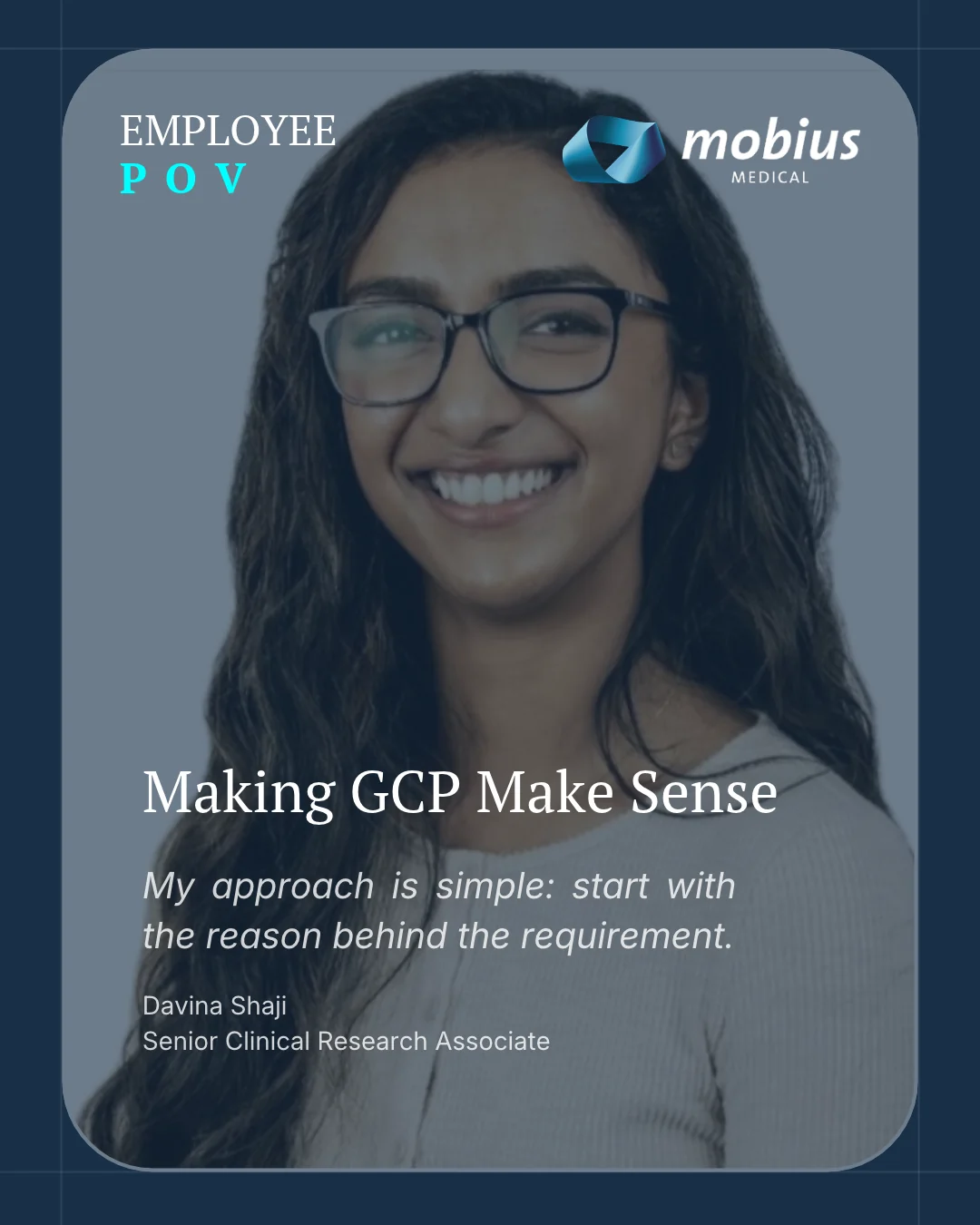
Davina Shaji shares how explaining the purpose of Good Clinical Practice helps site teams make decisions, document oversight and follow through.
Having worked on both the site and monitoring sides of clinical trials, I have seen how easily GCP can sound like a long list of rules disconnected from the decisions sites make every day.
My approach is simple: start with the reason behind the requirement.
What are we trying to protect? What could happen if this step is missed?
At its core, GCP is about protecting participants, making responsibilities clear and ensuring trial records can be trusted. Once people understand that purpose, the process feels less like paperwork. They are also far more likely to apply it correctly when a situation does not fit neatly into a checklist.
It helps to distinguish between completing a task and being responsible for the decision behind it.
Appropriately trained and delegated staff may perform study activities and document factual information. However, medical assessments and trial-related medical decisions must remain with the Principal Investigator or an appropriately qualified Sub-Investigator.
The study record should make it clear:
- what was reviewed;
- who made or confirmed the decision;
- when it occurred; and
- what follow-up was required.
That demonstrates appropriate oversight without creating duplicate documentation for its own sake.
I also try to make GCP discussions practical. I ask:
- What would you do first?
- Who is responsible for the decision?
- Where would it be documented?
- When would you escalate the issue?
These conversations can uncover gaps or different interpretations before they become protocol deviations or monitoring findings. Monitoring should not be the first time uncertainty is identified.
Ultimately, a date, signature, assessment or follow-up note is more than an administrative requirement. It shows that participant safety was considered, the right person made or reviewed the decision, and the necessary action was completed.
The goal is not paperwork that simply looks complete. It is sound decisions, visible oversight and clear follow-through.